IELTS Listening by Andrew Guilfoyle.jfif

Hi everyone. Guess what? My latest IELTS book has just come out: IELTS Listening (see the above picture). It was really difficult to write, actually, because it required lots of recordings (unlike the other books).

Anyhow, with this book, I complete ALL the IELTS/English skills. Here's a picture of all these IELTS books.

That's SEVEN books in all - which is a huge intellectual effort. If you carefully read through all of these books, doing every exercise, then ..... well, your IELTS score would be amazing! However, it is obviously better to have me as the teacher, helping through these difficult skills. And on that subject ....

- the IELTS Writing/Listening Course starts Monday July 26 (MWF night).

-the IELTS Speaking Course starts Thursday 29th (every Thursday).

安德魯Andrew 發表在 痞客邦 留言(0) 人氣()

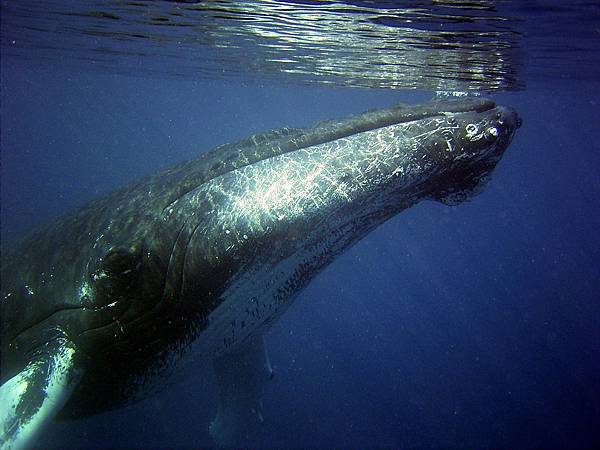
Whale.jpg

Deep Ocean Life

The previous reading examined how deep, dangerous, and difficult it is to get to the bottom of the world’s oceans. Let’s keep thinking about this, but more specifically about the creatures which live down there.

For a start, let’s consider humanity’s relationship to the bottoms of the oceans. This area is so distant from human existence that for decades many countries dumped nuclear waste there. America, Russia, China, Japan, and New Zealand, and nearly all the nations of Europe freely threw drums of this stuff into the water, to sink out of sight, out of mind. After almost 50 years, this practice was banned in the 1990s, yet hundreds of thousands of barrels filled with radioactive gunk still lie at the bottom of the ocean, and we can only hope the long-term effects will be small.

The fact the human beings actually performed such horrible acts shows just how psychologically disconnected we are from the ocean depths. Even its biggest inhabitants, such as the blue whale (the biggest creature ever to have lived - look at the above picture!!!!!), which comes regularly to the surface to breathe, still has many mysteries, and is very difficult to film. As for creatures which never comes to the surface, such as the giant squid, they are still largely unknown – in fact, scientists now agree that there are still many millions of animals living in the deep sea which we haven’t discovered.

We are, actually, still largely ignorant about the ways eco-systems work in the ocean. A good example of this ignorance is in the Southern Ocean - that is, the ocean around Antarctica. Being so cold, rough, and lacking in sunlight, by any reasonable understanding, this area could not support much life, but it most certainly does. There are about 15 million crab-eating seals, four million Adelie penguins, two million Weddel seals, and half a million emperor penguins all living happily enough in an area where we, human beings, would struggle to survive. Such a top-heavy food chain would simply seem impossible to exist, but it is there, and somehow it all works. It is an interesting fact that scientists still don’t really know why.

安德魯Andrew 發表在 痞客邦 留言(0) 人氣()

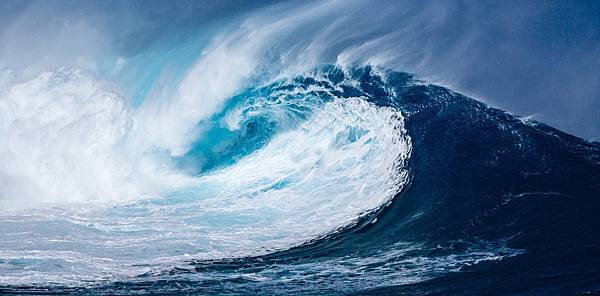
Ocean.jpg

The Oceans & Seas

Did you read the previous post? Did you realise what material I was referring to? Yes, it is water! In fact, water is SO important, I thought I would finish this set of readings by looking at water in depth. [There’s a joke there; do you get it? ‘In depth’? Water? Get it?]

So, let’s continue thinking about water.

All the water on the earth is in a closed system, which means that the total amount cannot increase or decrease – and this water exists in …

- the oceans and seas, as salt water,

安德魯Andrew 發表在 痞客邦 留言(0) 人氣()

Mother and son.jpg

[You Guess What This Is About]

Let’s think about dihydrogen oxide. This material can often kill you, or hurt you badly (depending on what people have done to it previously), but it is absolutely necessary to keep the human body going. This material can combine with other material to make something very nasty which, if thrown into your face, will burn you horribly. If you have enough of this material together in one place, and make it move a lot, it can cause huge problems, destroying buildings and killing thousands of people. It does this everywhere, all over the world, every year.

This material has no taste, yet people love the taste. It has no form – that is, it is formless – yet people love watching it and the way it acts. This material is so ordinary, yet people travel thousands of miles (and spend thousands of dollars) just to be beside it. Every year, tens of thousands of people die in it, yet millions of people are always eager to be immersed in it.

This material comes in three main states, but we mostly want it and like it and absolutely depend on it in just one of those states. Without this material, the human body quickly breaks down and goes into crisis. Take this material completely away and within a few days, people’s lips will crack and shrink and all but disappear. The nose will do the same, the body will weaken, and a painful death soon follows.

Yet, despite the body’s desperate need for this material, the overwhelming majority of it on earth is deadly poisonous, and if it is put into the human body, seizures, unconsciousness, brain damage, and death will quickly follow.

安德魯Andrew 發表在 痞客邦 留言(0) 人氣()

Everest.jpg

Mount Everest

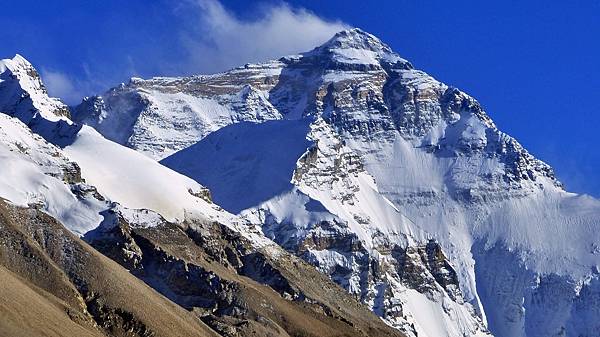
The above picture shows Mount Everest. This is the Earth's highest mountain, with its peak being 8,848 metres high. The mountain was given its name by the British, who controlled India at the time when this new mountain was discovered. Since it is the highest, many people want to climb it – yet it is a very dangerous mountain to climb.

When Everest was first discovered, and its height calculated, British climbers were the first to get there. In 1921 they hiked to the mountain to take photographs. The next year, in 1922, they tried to climb it, reaching above 8000 metres for the first time ever – although seven helpers were killed by an avalanche.

This same British team returned in 1924 for another try. After failing a few times, two climbers, named Mallory and Irvine, made a final try. They started from a camp high on the mountain, heading for the top, but were never seen alive again. No one is quite sure whether they reached the top or not. 75 years later, in 1999, some climbers found the body of Mallory, but they did not find Mallory’s camera and could not prove whether he got to the top or not.

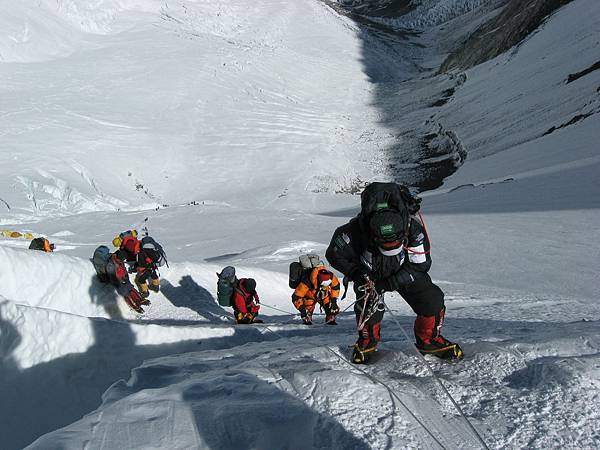
For many years after Mallory and Irvine, it seems that Everest was simply too high for human beings to climb. Yet technology got better, and in 1953, two climbers – Hillary and Tensing – with more advanced oxygen equipment and warmer clothing, finally reached the top. Now, in this modern age, many people can climb Mount Everest with the help of climbing companies, which offer support climbers, all the food and equipment, and who put in special ropes along the climbing path to make it safer. This has made climbing Everest very popular – but people still die, regularly, on this dangerous mountain. 

安德魯Andrew 發表在 痞客邦 留言(0) 人氣()

Climbing Everest.jpg

Mountain Ranges

A mountain range is a place where there are many mountains, usually in a rough line. But they are certainly not regularly arranged but usually mixed and broken, with a variety of rock types.

But why do we even have mountains? The answer is that they are a result of the movement of the pieces of the earth’s outer layer. These pieces move slowly, hitting each other, pushing some parts up, other parts down, and sometimes creating volcanoes. These volcanoes can grow higher, forming their own mountains. This has happened a lot around the Pacific ‘Ring of Fire’.

The longest mountain range in the world is the Andes in South America, at 7,000 kilometres, but it is the Himalayas in Central Asia which contain the highest mountains, including Mount Everest, highest of them all.

Although high mountains look wonderful in photographs, they are not particularly nice places. The weather on mountains becomes colder as you go higher. The air gets thinner, and there is less greenhouse effect holding in the heat. For this reason, the highest mountains have snow, sometimes all the time, and many important rivers in the world begin from the melting snows in higher mountain ranges.

安德魯Andrew 發表在 痞客邦 留言(0) 人氣()

Online class.jpg

New Online IELTS Course

What day?  Mon./Wed./Fri. IELTS Writing

When? Beginning this Monday (14th)

What time? 7.00 pm to 10.00 pm

Yes, this coming Monday night, I will begin a special discounted (= cheap) online IELTS Writing Class. All you need is a computer, my writing books, and Zoom ..etc.. and you can join. To repeat, this will be a special discounted course.

安德魯Andrew 發表在 痞客邦 留言(0) 人氣()

computers.jpg

Computers

A computer is a machine that can be programmed to do something by itself. They have one main part to receive the orders and information, and another part to remember and store the information. Well, this sounds simple, but, of course, it isn’t.

The first computers did not use electricity. They just used mechanical parts which connected together to do mathematics – for example, to allow ships to work out where they were, and to predict the movement of the planets.

An Englishman, Charles Babbage, is now considered the ‘father of the computer’. He made the first programmable computer in 1833. Information was given to the machine using special cards with holes in them. For the output, the machine would have a printer and a bell. The trouble was, the machine was about a 100 years ahead of its time. All the thousands of parts had to be made by hand – and the machine could not be constructed in Babbage’s lifetime.

In the 1940s, electronics were used for these machines, and suddenly these those calculations could become faster and better. However, the first electronics were primitive by today's standards, which meant that the first electronic computers were the size of large rooms. Now, in this modern age, computers used integrated chips, or ICs, and this makes them billions of times smaller and faster than the early mechanical machines. This has allowed computers to shrink in size, and with the development of better batteries, now everyone has a ‘personal computer’ – often in the form of a laptop which they can carry around. Computers are now part of the information age. Charles Babbage would certainly have been happy to know about this.

安德魯Andrew 發表在 痞客邦 留言(0) 人氣()

robot.png

In this pixnet blog, I don't normally show my thoughts written in Chinese, but this article, which has been been printed in an online magazine, was translated for me. I had a friend check the translation, and there are indeed some unclear parts, but I hope the main meaning gets through.

背英文有用嗎?雅思考官幫你解答

歷史背景

1960 年代,教授語言的方法被稱為“語法-翻譯-記憶”。這種方法看起來像教任何人都可以,大多數老師都很高興,因為它很容易教。它只需要很少的努力、培訓、技能或準備,你只是一頁一頁地翻閱教科書。問題是,每個人都開始意識到它根本沒有什麼作用。

時代變遷

安德魯Andrew 發表在 痞客邦 留言(0) 人氣()

ICs.jpg

Electronics

Electronics is all about controlling electrical energy. Scientists and inventors have made many kinds of small objects – called components – which control this energy in different ways.

So, what are these components? They are single objects with two or more wires coming out from them. These wires all connect with other wires, and so all the parts fit together to make an electronic ‘circuit’. Yes, it can be very complicated, but these circuits can do amazing things. 

Putting together all these little components takes time. Another problem is that each component produces heat, and because everything is so close together, the circuits can become very hot, which is why, for example, larger computers have fans

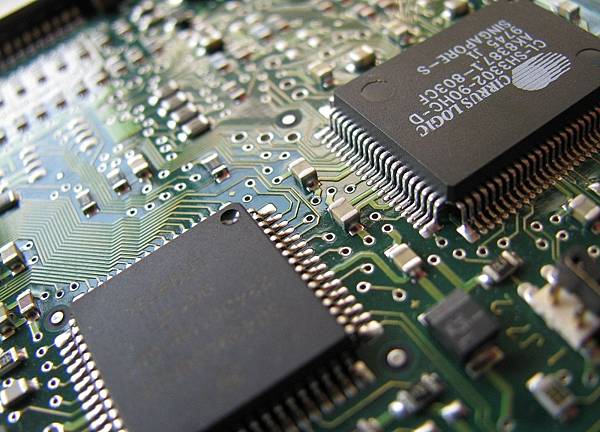
But by the middle of last century, scientists began to realize that they could make another small object do the same thing as electronic circuits, all inside a single piece of this material. The material is called silicon, and the object was called a ‘chip’. The first chips could only replace a small number of electronic components – but it was still an amazing invention, since it allowed the circuits to become smaller. Many scientists became interested, and the chips become better and better, and smaller and smaller. Today, millions of electronic components can be inside just one single chip – now called an ‘integrated chip’ or IC. {See the picture above.]

安德魯Andrew 發表在 痞客邦 留言(0) 人氣()

man smoking.jpg

Tobacco

Tobacco is a product prepared from the leaves of the tobacco plant. Dried tobacco leaves are mainly smoked as cigarettes, but the product can be chewed, or absorbed through the nose. Scientists now know that tobacco can cause many diseases, including several types of cancers. If people didn't smoke, they wouldn't die so prematurely. Thus, tobacco is considered the world's single greatest cause of preventable death.

Tobacco came from the Americas: Central and South America, and had been used by the local people there for thousands of years. When the people from Europe first arrived in the Americas, they noticed the local people smoking tobacco. These Europeans tried it themselves, and eventually decided they liked it. Yet the tobacco smoke of that time was strong and bitter, and could only be smoked a little at a time. New varieties of tobacco, which were not so strong, were soon developed, and this led to the product becoming fashionable in Europe. Thus, tobacco production eventually became a major industry.

However, tobacco is a form of drug. It contains nicotine, which is addictive – that is, makes people want to keep smoking. Many plants contain nicotine, which helps stop the plant being attacked by insects, but tobacco contains much more of this substance than most other plants. This led to the formation of anti-smoking groups [See the picture above, which is obviously designed to warn people of the dangers of smoking]. The advertising of cigarettes was eventually banned, and smoking began to fall in the developed world. Yet, it has continued to grow in the developing world, which has the greatest population. This means that the production of tobacco in the world has generally been increasing, with China being the greatest producer by far.

Question Time

安德魯Andrew 發表在 痞客邦 留言(0) 人氣()

sugarcane.jpg

Sugar Cane

Sugarcane, or sugar cane, is one of the several species of tall plants which originated in South Asia, and is now grown widely for sugar production. Here is an interesting fact: sugar cane is actually a species of grass – the largest grass in the world! Here’s another interesting fact: sugar is the largest crop in the world in terms of production, with almost 2 billion tons of the stuff produced each year. Clearly, the world has a ‘sweet tooth’.

The Persians, followed by the Greeks, discovered the famous "grass that produces honey without bees" in India around 500 BC. They began to plant and grow the crop, but in those times, it was a rare and expensive product. In the 18th century, sugarcane plantations [as in the above picture] began in many parts of the world, and the need for workers caused great movements of people, including black slaves from Africa. This is because harvesting sugar cane needs many people - that is, it is very labour intensive. Even today, half of the sugar produced in the world is still harvested by hand.

In the developed world, mechanical harvesting is used, where special machines cut the cane and stack and load it into boxes. Brazil leads the world in sugarcane production, by far, with India second, and China third. But after getting the sugar cane, it must go through another long process. This first involves crushing it, to remove the juice. This juice is then refined into raw sugar, which is further refined into brown sugar, which can be refined yet again to white sugar – which is the sugar most people are familiar with.

Question Time

安德魯Andrew 發表在 痞客邦 留言(0) 人氣()

Blog Stats
⚠️

成人內容提醒

本部落格內容僅限年滿十八歲者瀏覽。
若您未滿十八歲,請立即離開。

已滿十八歲者,亦請勿將內容提供給未成年人士。